Tree Doc NJ Blog · Updated September 2026
7 Signs Your Tree Is Dying or Hazardous
Short answer: dead branches in the crown, peeling bark, fungus on the trunk, a new lean, and root damage are the big five warning signs. Here's how to read each one — and when to act fast.
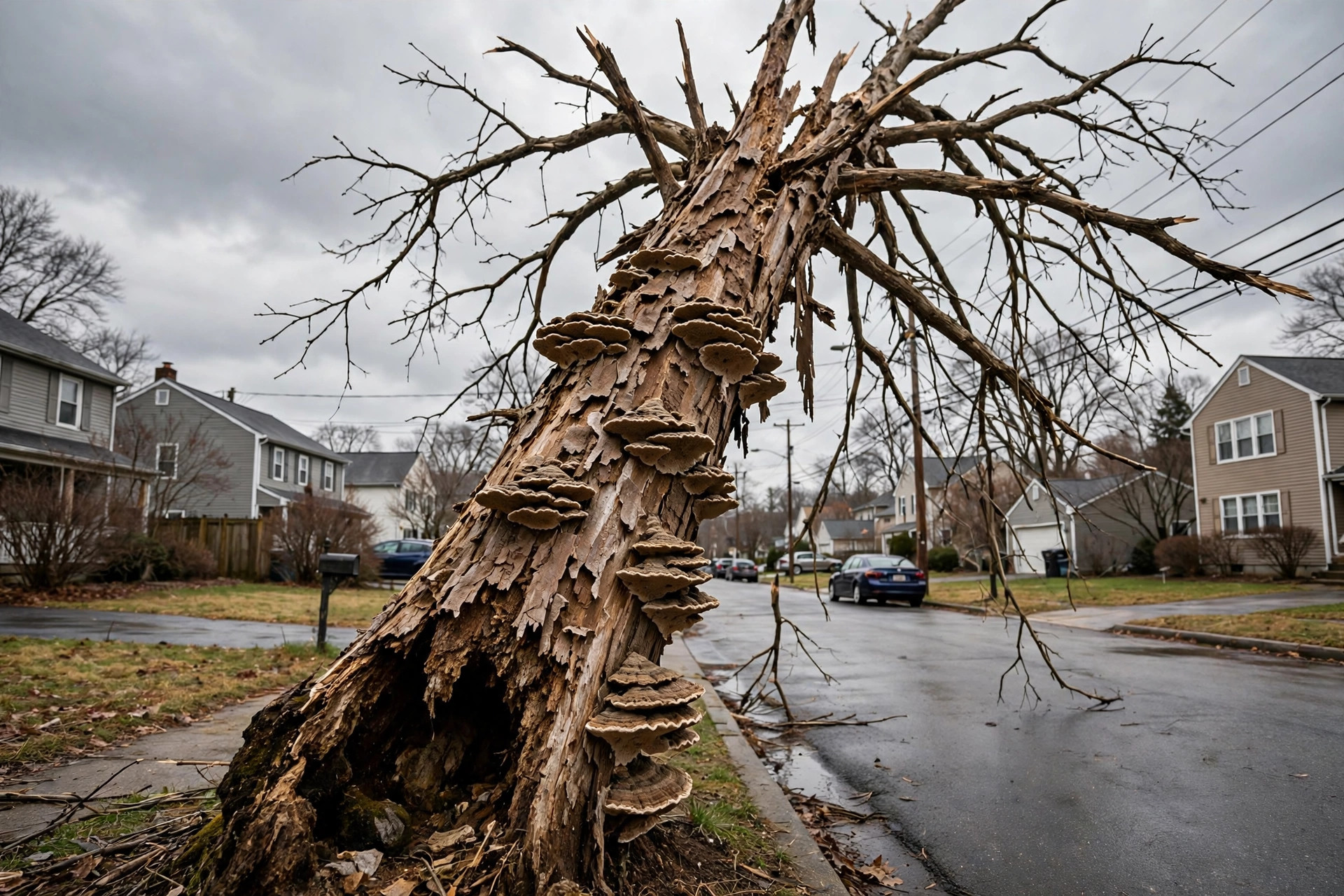
1. Dead branches in the crown
Stand back and look at the top of the tree. A healthy tree has a full, even canopy; a dying one shows bare, leafless branches scattered through the crown, or a dead top with growth only below. Some deadwood is normal, but when a third or more of the crown is dead, the tree is in serious decline. Dead branches are the first to come down in wind — which is why regular deadwood removal matters.
2. Bark peeling, cracking, or missing
Bark is the tree's skin — when large patches slough off and don't grow back, something is wrong underneath. Vertical cracks, cankers, and bark falling away in sheets point to disease, decay, or pest damage. On ash trees across Clifton and Paterson, bark shedding in strips is the calling card of emerald ash borer kill.
3. Fungus on the trunk or at the base
Those shelf-like brackets growing out of the trunk — called conks — are the fruiting bodies of fungi digesting the wood inside. Mushrooms clustered at the base mean root rot. Either way, internal decay is advanced and the tree's strength is compromised. This is one of the clearest call-a-professional signs there is.
Seeing Any of These Signs?
Get a free hazard assessment — we'll tell you honestly whether the tree can be saved or needs to come down.
(973) 653-8456Tap to call now4. A new or worsening lean
A tree that has always leaned is usually fine. The dangerous lean is the new one: a tree that was straight last year and now tilts, especially with cracked or heaving soil at the base. That means the root plate is failing. White pines around Wayne's lakes do this after saturated-soil storms — a new lean is a call-us-now situation.
5. Root damage you can see
Roots are easy to damage without realizing it: utility trenching, driveway repaving, grade changes that bury the root flare, or construction severing roots on one side. A tree that lost major roots can look fine for a year or two — then fail in a storm it once would have shrugged off. If you've had construction near a mature tree, get it assessed.
6. Heavy woodpecker activity and boring holes
Woodpeckers don't eat wood — they eat what's in the wood. A tree suddenly covered in woodpecker holes is full of insects living in dead and dying wood. On ash, look for blonding (bark stripped hunting borer larvae) and D-shaped exit holes. The birds are telling you what the tree won't.
7. No leaves — or the wrong leaves at the wrong time
A tree that leafs out late, drops leaves early, or grows small, pale foliage is struggling. Compare it to the same species nearby — if every maple on the street is green and yours is thin and yellow in July, that's a stress signal. One bad season can be weather; two in a row is a pattern worth investigating.
What to do when you spot these signs
First, don't panic — and don't grab a chainsaw. Assess the target: what's under the tree? A declining tree in the back corner of a big lot can wait; the same tree leaning over a bedroom is an emergency. Second, get a professional assessment — we do hazard evaluations free across North Jersey and will tell you straight whether the tree is treatable, trimmable, or done.
If the verdict is removal, sooner is almost always cheaper and safer. Here's what removal costs in NJ — and why waiting rarely saves money.
Don't Guess — Get a Free Hazard Assessment
We'll look at the tree, explain what's happening, and give you honest options. No pressure, no obligation.
(973) 653-8456Tap to call nowDying Tree FAQs
Can a dying tree be saved in NJ?
Sometimes. Nutrient deficiencies, minor pest issues, and early-stage disease can be treatable with pruning, soil care, or treatment. Advanced decay, major root loss, and borer-killed ash are usually irreversible. An honest on-site assessment tells you which situation you're in.
How long can a dead tree stand before it falls?
There's no safe answer — some stand for years, others fail in the next storm. Dead ash is especially unpredictable and can drop limbs on calm days. Treat any dead tree near people or structures as a hazard now.
What does fungus on a tree trunk mean?
Shelf-like conks on the trunk or mushrooms at the base mean internal decay — fungi digesting the wood inside. The tree's structural strength is compromised, and more fruiting bodies means more advanced decay.
Is a leaning tree dangerous?
A lifelong lean is usually fine. A new lean — especially with cracked or heaving soil at the base — means the root plate is failing and the tree can topple. That's an urgent situation.
Who do I call about a hazardous tree in NJ?
For a tree on your property, call a licensed, insured tree service for a hazard assessment — ours are free. For a street tree, contact your municipality. If there's an immediate threat to life or power lines, call 911 or your utility first.