Tree Doc NJ Blog · Published September 13, 2026
Storm-Damaged Trees in NJ: How to Tell If Your Tree Is Dangerous After the September 2026 Storm
Short answer: after Sunday's storm, the danger isn't just fallen trees — it's the ones still standing. Check for a new lean, raised or cracked soil at the base, and hanging limbs. Here's what to look for.
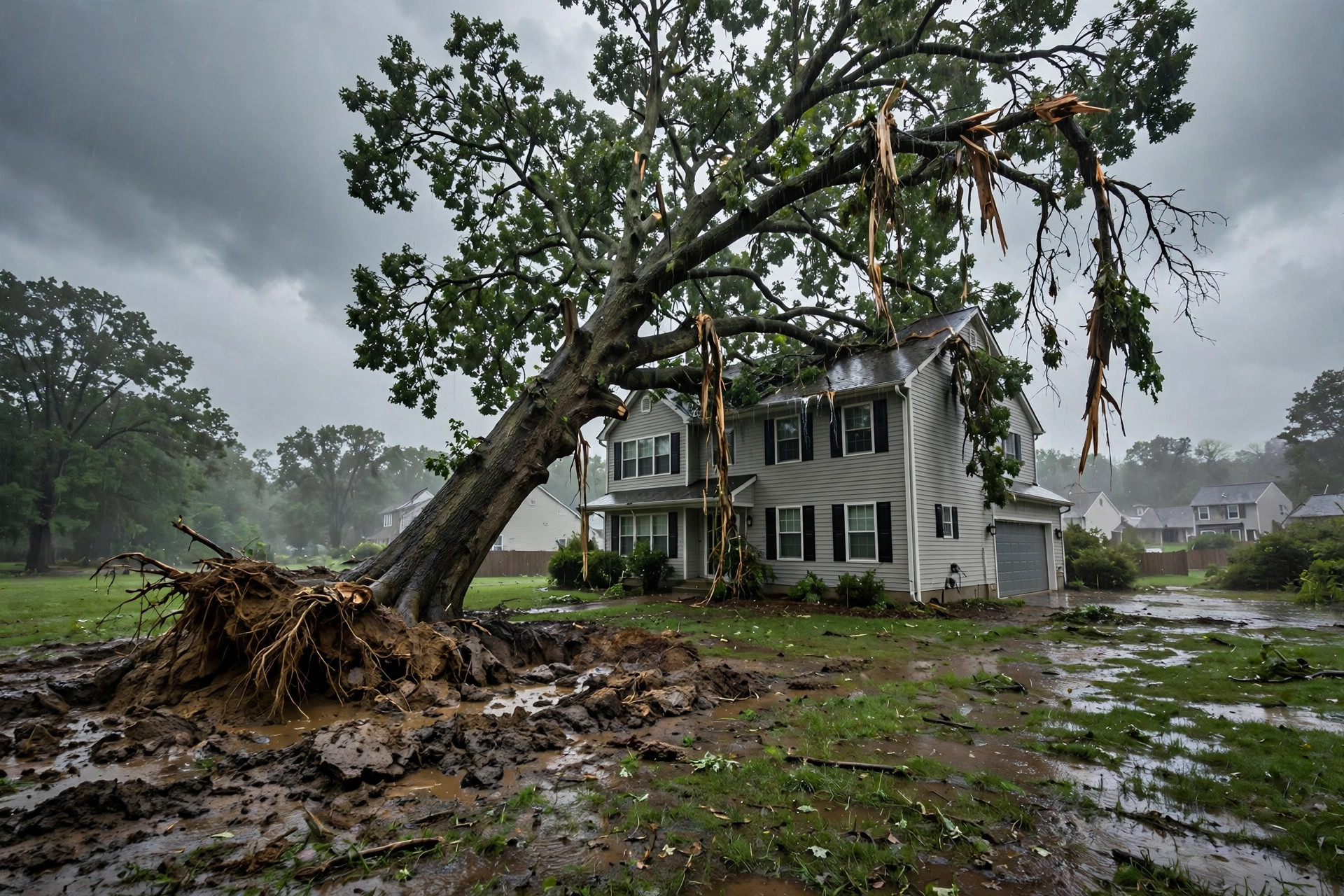
The September 13 storm didn't just flood basements — it soaked the ground to soup. Nearly 5 inches of rain in hours, and saturated soil is the number-one reason trees fail: roots grip dry soil like a vise, but a whole root plate can peel loose in mud while the tree still looks upright. If you have mature trees near your house in Wayne, Paramus, or Montclair — go look at them today.
1. Saturated soil and the failing root plate
A tree's stability comes from its root plate — a wide, shallow disk of roots and soil. When the soil saturates, that disk loses its grip. The tree doesn't have to fall during the storm, either: loosened root plates fail days later in a gust a healthy tree would shrug off. Any mature tree near your house deserves a look at the base right now.
2. A new lean is a red alert
A lifelong lean is usually fine — the tree grew that way. The dangerous lean is the new one: straight last week, tilting now. Check the base: if the soil is cracked, raised, or heaved on one side, the root plate is failing. Keep people, pets, and cars out of the fall zone — roughly the tree's height in every direction — and treat this as urgent.
3. Hanging branches and cracked limbs — the widowmakers
Look up. Storm winds snap limbs that stay lodged in the canopy, hanging by bark strips. These "widowmakers" can drop in the next breeze — or hang for weeks and fall on a calm day as the wood dries. Don't pull them down or cut them yourself; a hung-up limb under tension behaves nothing like a normal branch. Also check for long cracks down large limbs or the trunk — a cracked limb is a failed limb that hasn't finished falling.
Tree Down or Leaning After the Storm?
See our emergency tree service guide — then call for 24/7 storm response. Free hazard assessments across North Jersey.
(973) 653-8456Tap to call now4. Uprooted but still standing — the slow-motion fall
A partially uprooted tree wedged against a neighbor tree or a structure looks "caught" — temporarily. The root system is destroyed, the lean stresses whatever it's resting against, and the next wind finishes the job. Don't prop it or cable it yourself, and don't assume the tree it landed on is fine — it just took a massive impact load. This is a removal job, full stop.
5. What you can do yourself vs. what needs a crew
Homeowner-safe: picking up small fallen branches, photographing damage for insurance, and keeping everyone clear of suspect trees. That's it. Anything with a chainsaw near a damaged tree, a ladder under hanging limbs, or a leaning trunk is professional territory — storm-damaged wood is under tension in ways that surprise even experienced cutters. In Clifton, the classic post-storm call is the "just trimming one branch" job — the branch is never just one branch.
6. Emergency vs. can-wait-a-week: how to triage
Call now: a tree on your house, car, or power lines; a new lean with heaved soil; a blocked driveway or road; hanging limbs over walkways. Schedule this week: cracked limbs away from targets, trees that lost canopy but stand straight on solid soil, cleanup of downed trees threatening nothing.
Don't Guess — Get a Free Hazard Assessment
We'll walk your property, check every mature tree, and tell you honestly what's safe, what needs work, and what's urgent. No pressure, no obligation.
(973) 653-8456Tap to call nowStorm-Damaged Tree FAQs
My tree is leaning after the storm — will it fall?
Maybe, and you can't tell from your driveway. A new lean after heavy rain — especially with cracked or heaved soil at the base — means the root plate is failing. Keep people and cars out of the fall zone and get a hazard assessment immediately.
A big branch is hanging but still attached — what should I do?
Stay clear and don't try to cut it yourself. Hanging limbs are unpredictable and can drop without warning as they dry out. A professional crew with proper rigging removes them safely in minutes.
The tree looks fine but the soil around the base is raised — is that dangerous?
Yes — that's root plate lift. Roots on one side are tearing loose while the tree still looks upright. It's one of the most dangerous post-storm conditions because the tree looks normal right up until it topples.
Will homeowners insurance cover storm tree removal?
Usually yes if the tree damaged a covered structure like your house, garage, or fence — and many policies pay a limited amount for debris removal even without structural damage. Document everything with photos and keep all receipts.
Should I wait to see if my storm-damaged tree recovers?
Lost leaves grow back; broken structure doesn't. A tree with a cracked trunk, a failing root plate, or major limb loss won't heal back to safe. Waiting just lets the next wind finish the job — get it assessed now.