Tree Doc NJ Blog · Updated September 2026
Best Trees to Plant in New Jersey Yards
Short answer: plant trees that want to live here. Natives — red maple, white oak, dogwood, serviceberry, river birch — handle NJ winters, clay, and storms better than trendy imports. Here's what to plant and what to skip.
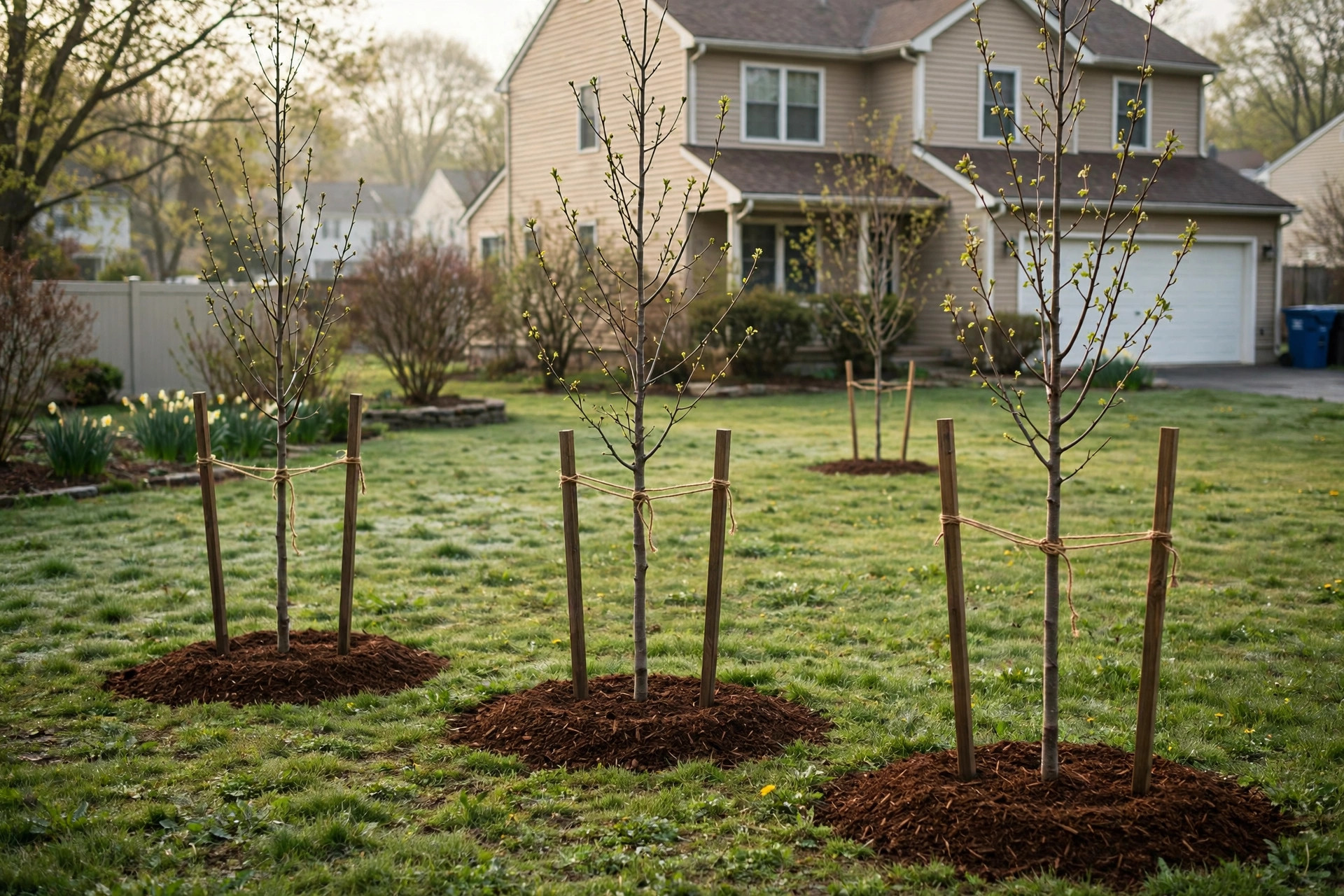
Start with natives — they do the work for you
North Jersey is USDA zone 6b–7a with cold winters, humid summers, and heavy clay soil in a lot of neighborhoods from Paterson to Wayne. Native trees evolved for exactly these conditions: they handle freeze-thaw cycles, tolerate local pests, and support native birds and pollinators — and need less watering once established. A nursery tree is a 20-to-50-year commitment, so match the tree to your site first, your taste second.
Our top 5 picks for NJ yards
- Red maple (Acer rubrum) — The all-rounder. Fast-growing, brilliant red fall color, tolerant of wet spots and clay. It becomes a large shade tree, so give it room. One of the most reliable trees we see in Clifton and Passaic yards.
- White oak (Quercus alba) — The legacy tree. Slow to start, but lives for centuries, feeds more wildlife than almost any other tree, and shrugs off storms that split weaker species. Plant it where it will never need to come down.
- Flowering dogwood (Cornus florida) — The small-yard star. Spring flowers, red fall foliage, and a mature height of 15–25 feet that fits under most power lines and in tight suburban lots.
- Serviceberry (Amelanchier canadensis) — The multitasker. Early white blossoms, berries birds love, orange-red fall color, and a compact form that fits the smallest Hackensack or Teaneck yard.
- River birch (Betula nigra) — The problem-spot solver. Thrives in soggy low corners where everything else rots, with attractive peeling bark. Keep it away from foundations and septic systems — it loves water a little too much.
Sun, soil, and space: the three checks
Sun. Full sun means 6+ hours of direct light. A dogwood in blazing all-day sun will struggle; a river birch in deep shade will stretch and weaken. Walk your yard at a few times of day before you buy. Soil. Much of North Jersey sits on heavy clay that drains slowly — fine for red maple, river birch, and most oaks. For tight clay, plant slightly high, the top of the root ball an inch or two above grade, so the crown doesn't drown. Space. This is where most planting mistakes happen. Check the mature spread, not the nursery size, and plant so half the mature canopy clears the house, driveway, and power lines. Tighter yards in Newark, Garfield, and Paramus call for dogwood, serviceberry, or redbud.
Planting a Tree? Start With the Right Spot
Free on-site estimates across North Jersey — we'll help you pick the right tree.
(973) 653-8456Tap to call nowTrees to avoid in New Jersey
Some trees are sold everywhere and regretted everywhere. Silver maple grows fast and breaks faster — weak, brittle wood that storms shred, and one of the trees we remove most in Montclair and older suburbs. Bradford / Callery pear splits apart at maturity and is invasive. Tree-of-heaven is an aggressive invasive that also hosts the spotted lanternfly — remove it, don't plant it. Willows are beautiful and thirsty; their roots hunt water relentlessly, so never plant near septic systems, sewer lines, or foundations. And the meta-rule: any tree planted where its mature size won't fit. That's the number-one reason trees get removed in North Jersey.
Planting and first-year care
Planting technique matters as much as species. Dig the hole two to three times as wide as the root ball but no deeper — the tree should sit slightly high. Remove burlap, wire, and trunk tags, spread circling roots, and backfill with native soil. Mulch 2–3 inches deep in a wide ring, pulled back from the trunk — no mulch volcanoes. Water deeply once or twice a week through the first growing season. Stake only if the tree won't stand on its own, and remove stakes after one year. Plant in fall if you can — October and November give roots a head start before summer heat.
From Stump to New Shade Tree
We remove problem trees and help you replant — free estimates, satisfaction guaranteed.
(973) 653-8456Tap to call nowPlanting Trees in NJ FAQs
What is the best shade tree to plant in NJ?
Red maple and white oak are top North Jersey shade picks — fast-growing, hardy, and long-lived. Give them 20+ feet of house clearance.
What is the best small tree for a small NJ yard?
Flowering dogwood and serviceberry are ideal — compact, with spring flowers and fall color, fitting under most power lines. Eastern redbud is another strong choice.
When is the best time to plant trees in NJ?
Spring (April–May) and fall (October–November). Fall is ideal — warm soil and winter rains help roots establish before summer.
How far should a tree be planted from a house?
At least 15–20 feet for medium trees, 20–30 feet for large shade trees. Check the mature canopy spread and plant so half clears the foundation.
What trees should I avoid planting in New Jersey?
Avoid silver maple and Bradford pear (weak, storm-prone), tree-of-heaven (invasive), and willows near septic or sewer lines. Never plant where mature size won't fit.