Tree Doc NJ Blog · Updated September 2026
Which NJ Trees Drop Limbs in Winter Storms (and What to Do This Fall)
Short answer: silver maples, Bradford/Callery pears, willows, snow-loaded pines, and ice-capped oaks drop the most limbs in NJ winters. The limbs that fail are rarely random — they're the ones you can spot and fix this fall.
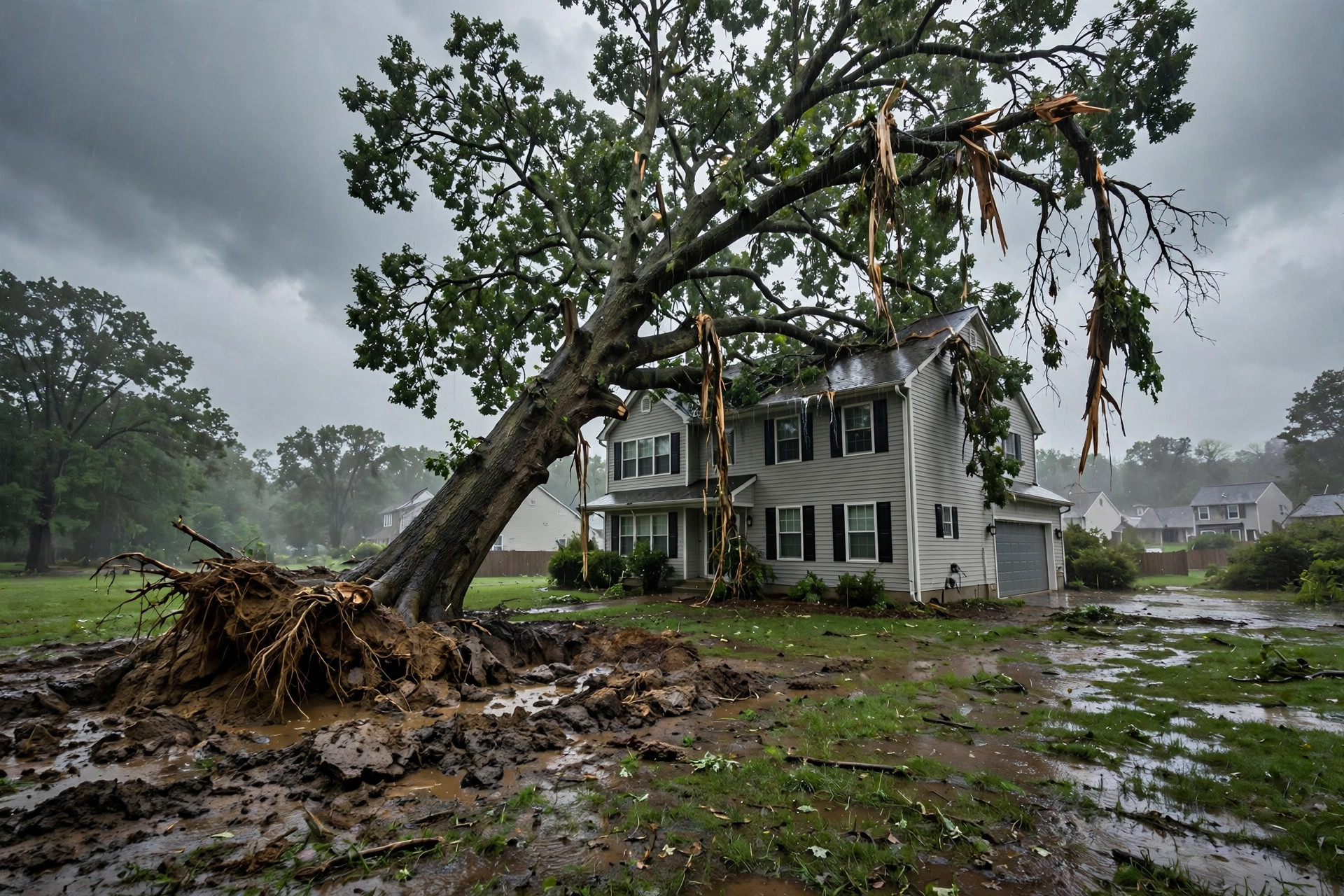
Why NJ winter storms snap limbs
Winter storms in North Jersey hit trees with a triple threat: ice, heavy wet snow, and nor'easter winds. Each one loads branches in a different way, and together they're brutal. Ice is the silent heavyweight — just a half inch of ice accumulation adds roughly 500 pounds of extra weight to a medium tree's crown. A full inch of ice can add over a ton. Branches are designed to flex, but every species has a breaking point, and ice pushes the weakest joints right past theirs.
Heavy, wet snow is the early-season hazard. Nor'easters in December and March often dump snow when temperatures hover around freezing — that sticky, heavy snow that weighs roughly 15–20 pounds per cubic foot. Evergreens catch the most of it (more on that below), but any broadleaf tree with a dense crown or deadwood can hold enough to fold a limb. Then comes the wind. A nor'easter ripping across Montclair or Teaneck gusts 40–60 mph for hours, rocking already-loaded limbs until the weak attachments let go.
The freeze-thaw cycle makes it worse. Water seeps into bark cracks in the afternoon, freezes and expands overnight, and quietly wedges those cracks wider all winter. By February, a crack that looked cosmetic in October can be a full structural failure waiting for one bad storm.
The highest-risk species in NJ
Not all trees fail equally. These are the species we get the most emergency calls about after winter storms — and the ones to inspect first this fall.
Silver maple — the limb-drop champion
Silver maples grow fast and weak, with brittle wood and a habit of forming tight, V-shaped branch unions that split under load. They're planted all over older North Jersey neighborhoods because they provide quick shade, but that speed comes at a cost: they self-prune constantly. If you have a big silver maple over your driveway or roof, expect to lose limbs every winter — and know that deadwood removal and crown thinning are not optional.
Bradford / Callery pear — the split-prone ornamental
The Bradford pear's perfect symmetrical shape hides a fatal flaw: all its main limbs radiate from one tight spot on the trunk, packed together like a bouquet. Under ice or snow load, those limbs split apart like a wishbone — often at the trunk, which can destroy the whole tree in one storm. 'Cleveland Select' and other Callery cultivars are better but still prone. Cabling the main unions is the best insurance for a pear you want to keep.
Willows — water-loving and brittle
Willows are notorious for brittle wood and aggressive, fast growth. They throw long, heavy limbs that catch wind like sails and snap at the attachment. Willows near Wayne's lakes and along streams are constantly loaded with wind and ice, and saturated soil after winter rains means the whole tree can shift, not just lose a limb.
Have a Silver Maple or Bradford Pear Over Your House?
Get a free fall risk assessment — we'll spot the limbs most likely to fail before winter hits.
(973) 653-8456Tap to call nowWhite pine & other evergreens — snow load targets
Evergreens are beautiful in winter and terrible at shedding snow. White pines hold their needles all year, so every snowfall accumulates in the crown instead of passing through bare branches. A white pine in a storm can carry hundreds of pounds of snow it never signed up for. Long lower limbs lever down and snap at the trunk, and whole leaders can fold. After a heavy snow, shake snow off small evergreens with a broom — but never try to ice a big one; leave the loaded pines to a professional.
Oaks — strong wood, ice-loaded crowns
Oaks have some of the strongest wood in the forest, but their broad, dense crowns catch enormous amounts of ice. In a bad ice storm, an oak's advantage disappears — ice-coated oak limbs are famous for tearing at the trunk or stripping bark down to bare wood. Oaks that already have decay, cracks, or co-dominant stems are the ones that fail first. An oak that survived fifty winters can still lose a massive limb in the fifty-first if ice finds the weak joint.
Warning signs of a hazardous tree
Storm damage looks random, but it almost never is. The limbs that come down usually showed one of these five signs for months — or years — beforehand:
1. Deadwood in the crown
Dead branches are the first to fall in any storm, wind or ice. They're brittle, they don't flex, and they detach with almost no force. Walk your yard this fall and look up: gray, bark-less branches sticking through a leafy crown are deadwood. Every one over a roof, driveway, or walkway should come down before winter.
2. Co-dominant stems and included bark
Co-dominant stems are two leaders growing side by side, joined in a tight V with bark trapped between them (included bark). There's no strong wood fiber connecting them — they're just pressed together, waiting to peel apart. This is the Bradford pear's signature defect, but oaks, maples, and pears all develop it. If you see a tight V-shaped fork with a ridge of bark pinched in the middle, that's a future split.
3. Cracks and cavities
Vertical cracks along the trunk or on major limbs mean the wood is already failing — freeze-thaw cycles will widen them all winter. Cavities (hollow spots) mean internal decay. A hollow tree isn't automatically doomed, but it has less strength than it looks like, and ice load doesn't care about appearances.
4. A new or worsening lean
A tree that always leaned is usually fine. The dangerous lean is the new one — especially with cracked or heaving soil at the base. That means the root plate is failing, and winter storms will exploit it. A leaning tree under ice load can uproot entirely, taking the root plate with it. This is a call-us-now situation, not a wait-and-see one.
5. Root damage
Roots anchor everything. Utility trenching, driveway work, grade changes, or construction that severs roots on one side leaves the tree balanced on half its foundation — and it can look perfectly healthy for a year or two before it fails in a storm it once would have shrugged off. If you've had construction near a mature tree, get it assessed before winter.
Spot Any of These Warning Signs?
Don't wait for the first ice storm. A free fall assessment takes 20 minutes and tells you exactly which trees are at risk.
(973) 653-8456Tap to call nowWhat to do this fall: your storm-prep checklist
Fall is the best season for storm preparation. Trees are entering dormancy, the leaves are off (or coming off, so we can actually see the structure), and there's still time to fix problems before the first ice storm. Here's the playbook:
Structural pruning
Structural pruning removes the weakest attachments — tight V-forks, crossing limbs that rub and wound each other, and overextended limbs that lever too far from the trunk. It also thins overly dense crowns so wind and snow pass through instead of piling up. This is the single highest-value thing you can do for a storm-prone tree. It's not a buzz cut (topping a tree makes it weaker, not stronger) — it's selective, targeted removal by someone who understands how trees carry load. Here's our seasonal trimming guide for timing details.
Deadwood removal
Every dead limb is a projectile waiting for a gust. Deadwood removal — climbing the tree and cutting out everything dead — is cheaper than emergency removal after a limb lands on your roof, and it opens up the crown so ice and snow can't accumulate as much. If you do nothing else this fall, do this.
Cabling and bracing
For valuable trees with weak but fixable joints — Bradford pears with wishbone unions, oaks with co-dominant stems — cabling and bracing installs steel cables high in the crown (to limit how far limbs can spread) and threaded rods through weak unions. It doesn't make a weak tree strong; it keeps the weak parts from moving far enough to split. Properly installed and inspected every few years, hardware lasts a decade or more and has saved countless ornamental trees from winter storms.
Have a storm clean-up plan
Even a well-prepped tree can take a hit. Know in advance who to call: keep the number of a licensed, insured emergency tree service on your fridge, know that fallen lines mean calling the utility first (not us), and never touch a limb that's in contact with a power line. After a storm, here's how to tell if your damaged tree is dangerous or salvageable — and what an emergency call covers and costs.
Book your fall tree risk assessment
Here's the honest math: fall pruning and deadwood removal cost a fraction of emergency storm work, and they're scheduled on your terms — not at 2 AM with a limb through the garage. Every fall we assess trees across Paterson, Clifton, Passaic, Wayne, Hackensack, and the rest of North Jersey, and we tell homeowners straight which trees are fine, which need work, and which ones should come down before winter.
The assessment is free. Winter limb damage isn't. Call Tree Doc NJ at (973) 653-8456 and get your trees storm-ready while there's still time.
Get Your Free Fall Risk Assessment
We'll walk the property, spot the risky limbs, and give you an honest plan before the first ice storm.
(973) 653-8456Tap to call nowWinter Tree Storm FAQs
Which trees lose the most limbs in winter storms?
In North Jersey, silver maples and Bradford/Callery pears are the worst offenders — weak, fast-grown wood that snaps under ice and snow. Willows, white pines (heavy snow load on evergreen needles), and oaks with ice-loaded crowns are close behind.
Why do tree limbs break in winter?
Ice is the biggest killer — just a half inch of ice adds roughly 500 pounds of weight to a medium tree's crown. Heavy wet snow on evergreens and strong nor'easter winds finish the job, especially on trees with weak branch attachments or deadwood.
Is fall a good time to prune trees for winter storm protection?
Yes — fall is ideal. Deadwood removal, structural pruning, and thinning dense evergreen crowns in September and October reduce wind resistance and remove the limbs most likely to fail before the first ice storm arrives.
Can a leaning tree survive winter?
A tree that has always leaned usually can. But a tree that developed a lean recently — especially with cracked or heaving soil around the base — has a failing root plate and is far more likely to topple under ice, snow, or wind load. Get it assessed before winter.
What is tree cabling and bracing?
Cabling and bracing use steel cables and threaded rods to support weak branch unions — like the tight V-shaped forks on Bradford pears — so they don't split apart in storms. It's installed by a professional and typically lasts 10+ years with periodic inspection.
How much does fall storm-prep pruning cost in NJ?
For a typical North Jersey yard, deadwood removal and storm-prep pruning runs a few hundred dollars for a small tree to $1,000+ for a large one. It's far cheaper than emergency storm removal, which costs 2–3x normal rates. Our assessments are free — call (973) 653-8456.